Field note ·
What Makes a Main Street Investable
Monica Hagewood, CRE · Founder & Principal
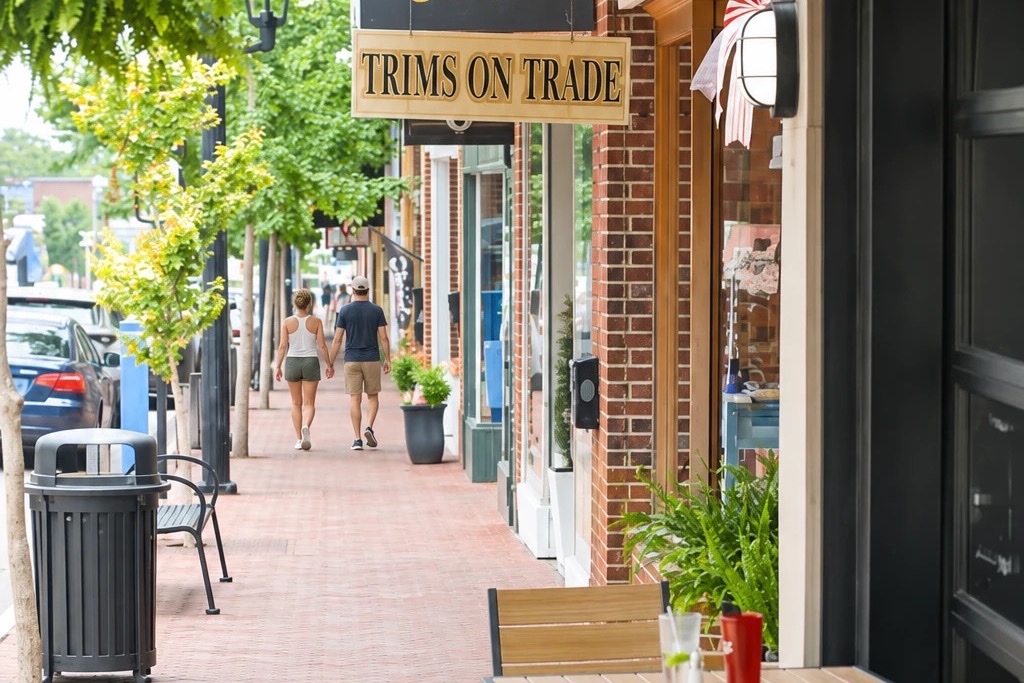
Walkability gets talked about as charm. Investors read it as a number.
If you lead economic development for a small town, you already know your Main Street matters. Here is the number to bring to the people who still need convincing.
In the 35 largest U.S. metros, walkable places carry real premiums over car-dependent ones: about 34% on for-sale home prices per square foot, and 47% on office and apartment rents. Those places cover 1.2% of the land in those metros and hold 19.1% of U.S. GDP.
That research covers big metros, not towns of 8,000, so I won’t pretend the figures transfer. The logic does. People pay more to be where they can park once, or not at all, and do five things.
Most small towns already own the hard part: a Main Street that was walkable before anyone called it that.
And the money is following. In 2025, designated Main Street programs reported $9.4 billion in public and private reinvestment, 6,936 net new businesses, 36,549 net new jobs and 10,623 rehabilitated buildings. For every dollar a local program spent to operate, about $23 in new investment followed.
So what makes a Main Street investable? Four things I often look for from the investor’s side of the table:
- Storefronts that run unbroken, with no vacant lots or surface parking interrupting the walk.
- Upper floors that can carry housing or offices.
- Someone local who owns the agenda, whether a Main Street program or a DDA.
- A short, sequenced list of what comes next.
The charm is your town’s asset. The plan is what gets it underwritten.
Walk your Main Street end to end this week. Where does the walk break? (This is a great season for Main Street, so remember and walk it again in February.)
Sources
- Smart Growth America and Places Platform, Foot Traffic Ahead 2023. Source for the 34% for-sale premium per square foot, the 47% office and multifamily rent premium, and the 1.2% of land and 19.1% of U.S. real GDP, all for the 35 largest metros.
- Main Street America, Collective Impact. Source for the 2025 figures: $9.4 billion in reinvestment, 6,936 net new businesses, 36,549 net new jobs, 10,623 rehabilitated buildings, and about $23 in new investment per program dollar.
Originally shared on LinkedIn.